If you’re thinking about becoming a CFA®, you’re probably serious about working in finance, whether you’re already in the field or trying to break in. Either way, with every article on the subject giving you a labyrinth to work through to get a solid path…
So, I wrote the step-by-step guide on how to become a CFA.
I’ll walk you through each step so you know exactly what to do, when to do it, and what to expect along the way.
Key Takeaways
- The CFA® Is a Long-Term Commitment: Becoming a CFA takes time, discipline, and consistency, but the payoff can be worth it.
- You Need a Clear Step-by-Step Plan: Eligibility, registration, studying, exams, and work experience all follow a defined path.
- Smart Studying Beats Long Studying: Consistent practice questions, mock exams, and review sessions matter more than cramming.
- Ethics Aren’t Optional: Ethics play a major role in the exams and in real-world investment decision-making.
- The Charter Opens Career Doors: The CFA can unlock roles across investment management, analysis, and portfolio-focused careers.
Step 1: Understand What the CFA® Charter Really Is
Before you sign up for anything, you need to know what you’re getting into.
The CFA charter is offered by the CFA Institute. It’s designed for people who want careers in investment management, research, and related roles. Many investment professionals pursue it to sharpen their skills and boost credibility.
What does the program focus on?
- The investment decision-making process
- Ethics and professional standards
- Real-world applications across wealth management and beyond
While tests are a big part of earning CFA status, you’ll need to go beyond passing; you have to learn how smart financial decisions actually get made.
Step 2: Check the Basic Requirements
Let’s make sure you’re eligible.
To enroll, you’ll need at least one of the following:
- A bachelor’s degree
- Final-year student status
- Relevant professional experience
That’s it. No GMAT. No fancy prerequisites.
Once you qualify, you can officially register for the CFA program and start planning your journey.
Step 3: Learn What You’ll Study (and Why It Matters)
The curriculum is broad, but that’s a good thing. You’ll master a wide variety of subjects in the finance industry, making you more well-rounded (and expanding your lineup of job opportunities).
You’ll study topics like:
- Investment analysis and valuation basics
- Portfolio management strategies
- Corporate finance and capital decisions
- Equity investments and market behavior
- Risk management tools used by firms
- Ethics, including a formal professional conduct statement
This knowledge translates directly into managing client portfolios and making smarter calls on asset valuation.
Step 4: Understand the CFA Exam Structure
Now let’s talk about the big hurdle: the CFA exam.
There are three levels. You must pass each one in order.
Each level builds on the last, moving from concepts to application to judgment.
- Level I: Fundamental concepts and tools
- Level II: Asset analysis and valuation
- Level III: Portfolio strategy and client decisions
When you register for each exam level, you’ll get to pick an exam date. Make sure you’re giving yourself enough time to properly prepare.
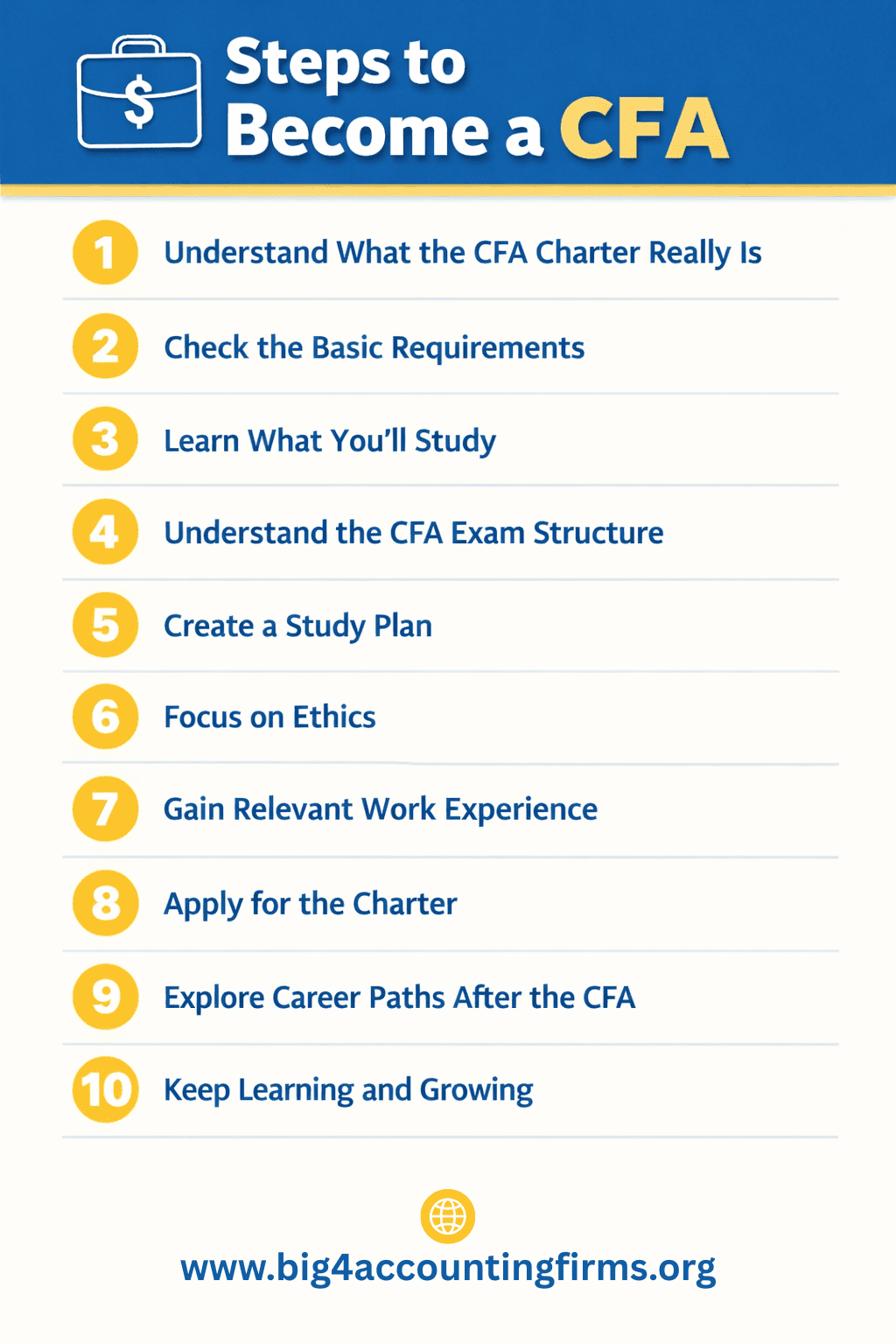
Step 5: Create a Study Plan With a CFA Prep Course That Actually Works
Here’s where most people struggle. Not because they aren’t smart, but because they don’t plan.
I suggest starting at least six months before your exam. Use one of these top CFA prep courses that help you study efficiently. Then break it down.
A simple weekly plan might include:
- Reading a small section each day
- Reviewing notes every weekend
- Answering practice questions regularly
Don’t wait until the end to test yourself. Use practice exams and full mock exams early and often. They help you spot weak areas before it’s too late.
Step 6: Focus on Ethics (Yes, Really)
Many candidates underestimate ethics. Don’t be one of them.
The ethics category ties directly to ethical practices expected across the financial industry. It also shows up heavily on exams and in real work situations.
Why does this matter?
Because employers want people they can trust, as do clients. Ethics guide how you handle money that isn’t yours, which is kind of a big deal.
Step 7: Gain Relevant Work Experience
Passing exams isn’t enough. To become a CFA charterholder, you’ll also need qualifying work experience.
This usually means roles involving:
- Research
- Analysis
- Decision support
Jobs in the broader finance industry count, especially if they connect to investments or analysis.
I recommend tracking your experience hours early and often. It’s easier to track as you go than to come back and figure it all out later—in that way, it’s a lot like taxes.
Step 8: Apply for the Charter
Once you pass all three exams and complete your experience, you can apply for the Chartered Financial Analyst designation.
This includes:
- Submitting work history
- Agreeing to ongoing professional responsibilities
- Staying aligned with high standards
When approved, congrats. You’ve earned it.
Step 9: Explore Career Paths After the CFA
So, what’s next?
Well… Your career!
Common career opportunities include:
- Research analyst
- Portfolio manager
- Risk analyst
- Advisor roles in wealth management
Some professionals focus on investment support, while others opt for a strategic position. Either way, the charter gives you credibility and flexibility to choose the right path for you.
Step 10: Keep Learning and Growing
The CFA journey doesn’t end once you get the charter. In fact, that’s just the foundation—not the finish line.
Markets change. Tools evolve. Expectations rise. And simply put? Staying current helps you stay valuable.
So naturally, your charter is a huge accomplishment, but don’t get lost in the steps. Think about what you want from your future, and how your CFA status can help you achieve those goals.
Conclusion
If you’ve made it this far, here’s the big picture.
You don’t need to have everything figured out today; you just need a plan. Start by making sure you’re eligible (or will be in the near future). Get registered, pick an exam date, study consistently, practice often, and gain real-world experience.
Then, apply for that hard-earned Chartered Financial Analyst designation.
If you’re willing to commit, take it step by step, and show up day after day, even when it gets hard (and it will), becoming a CFA is absolutely achievable. And trust me, future-you will be glad you started today.
FAQs
No. While it helps, many candidates come from non-finance backgrounds and learn the fundamentals through the curriculum.
Most people take about four to five years, including exams and required work experience.
It’s known for being challenging due to depth and volume, not trick questions or advanced math.
Yes. Most candidates work full-time and study early mornings, evenings, or weekends.
Roles in investment analysis, portfolio management, asset management, and wealth management benefit the most.