
How to Become a CPA: 8 Steps to Accounting Success

If you’re curious about joining nearly 700,000 other accounting professionals in the United States, you’re probably just digging into the “how to become a CPA” search results.
My goal? Now that you’re here, let’s get all of your questions answered in this article (and avoid that 2 AM Google search rabbit hole).
In this guide, I’ll walk you through the process from start to finish so you can move forward with confidence and a clear plan.
Key Takeaways
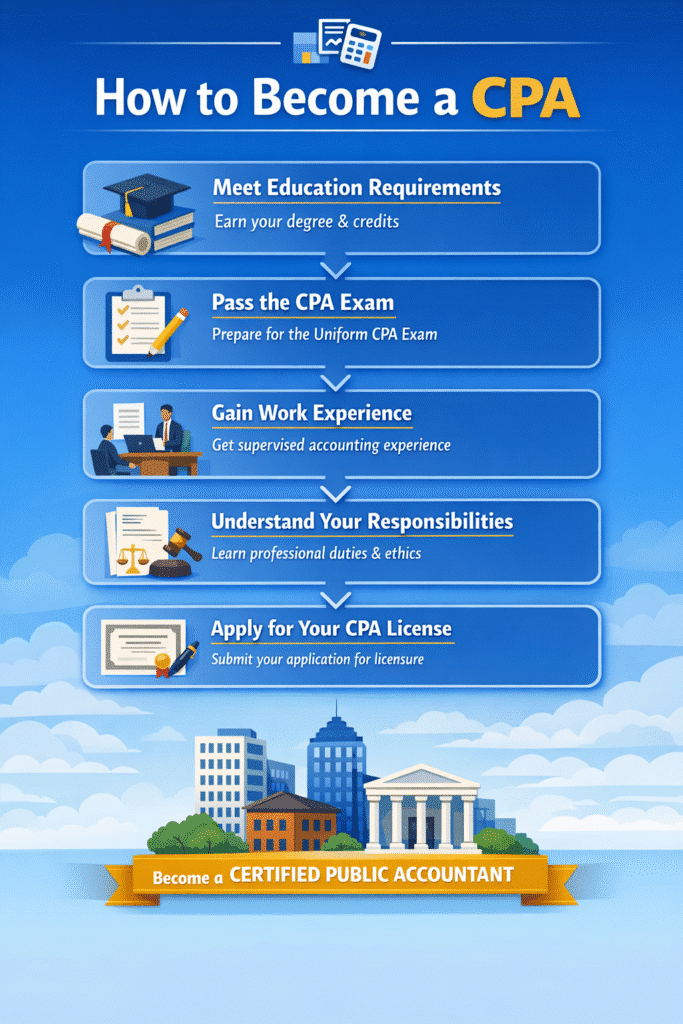
- The CPA Path Is Structured: Education, exams, experience, and licensure all follow a defined order.
- Education Comes First: You must meet specific credit and coursework rules before you can sit for the exam.
- The Exam Is the Biggest Hurdle: Passing the Uniform CPA Exam requires steady prep and a clear study plan.
- Experience Turns Knowledge Into Skill: Supervised work is required before you can become licensed.
- Licensure Is the Finish Line: Applying for and receiving your CPA license is the final step in the process.
Step 1: Understand What a CPA Actually Does
A CPA is more than just an accountant with extra letters. A licensed CPA can take on responsibilities that others can’t, including signing reports, offering certain opinions, and working directly with regulators.
CPAs work across many areas, including:
- Public accounting
- Corporate finance roles
- Advisory and consulting work
- Jobs with government agencies
Common tasks include preparing financial statements, reviewing financial reporting, and helping organizations meet strict standards. Many licensed accounting professionals also work in tax, audit, or consulting roles. So, if you’re after both flexibility and authority in the finance world, this could be a good fit for you.
Step 2: Meet the Education Requirements
Every state has its own rules, but most follow similar education and experience requirements.
You’ll need to complete your education at an accredited college, usually starting with a bachelor’s degree. Most candidates earn an accounting degree, though related majors can also work if you meet the coursework rules.
Typical educational requirements include:
- Core financial accounting classes
- Courses in financial accounting and reporting
- Coverage of auditing procedures
- Business courses such as economics or finance
Many states also require a specific number of accounting credits and general business coursework. Some students choose to earn a master’s degree to reach the required credit total more easily.
Step 3: Confirm You’re Eligible in Your State
CPA rules are set at the state level, so it’s important to review your local CPA requirements early.
Most states require:
- 150 total college credit hours
- Specific accounting and business classes
- Proof of education before testing
Once approved, you’re officially considered one of the CPA candidates eligible to sit for the exam.
Step 4: Prepare for the Uniform CPA Exam
The Uniform CPA Exam is the biggest hurdle on the path to CPA certification. It tests real-world knowledge, covering complex accounting topics such as:
- Financial accounting
- Business analysis
- Information systems
- Tax and regulation topics
Most people use a CPA exam review course to stay organized and focused. These programs help break down the material and keep your study plan realistic.
Learn about the best CPA exam prep courses here.
Step 5: Pass All Four Exam Sections
You don’t have to pass all sections at once, but you do need to pass all of them within a set time window.
The exam tests your ability to:
- Interpret data
- Apply accounting rules
- Understand how businesses actually operate
This is where many people decide whether the CPA profession is right for them. It’s challenging, but it’s also fair if you prepare properly.
Step 6: Gain Relevant Work Experience
Passing the exam isn’t enough on its own.
To earn CPA licensure, you’ll need to gain work experience under a licensed supervisor. A public accounting firm is the most popular locale for this, but other roles may qualify depending on your state.
Experience may include:
- Audit or tax work
- Preparing reports
- Supporting attestation services
- Exposure to advisory services
This step is what turns exam knowledge into real-world skill.
Step 7: Understand Your Professional Responsibilities
Holding a CPA license comes with authority and accountability.
CPAs often work with sensitive information and may represent clients before tax authorities. Many follow the standards set by the American Institute of CPAs, which helps define professional standards and ethics.
You may also work on tax compliance, audits, or formal opinions relied on by investors and regulators.
Step 8: Apply for Your CPA License
Once your education, exam, and experience are all up to snuff, it’s time to apply for your CPA license.
The process typically includes:
- Verifying education and experience
- Submitting references
- Completing a criminal background check
Once approved, you become a licensed CPA and can legally use the CPA designation.
Conclusion
Becoming a CPA takes planning, patience, and follow-through—but as tough as the process is, it’s actually very simple. Just follow the steps. It’ll take some grit, but if you’re interested in finance, you probably already have some (and in good measure, too).
So, get started today. Before you know it, you’ll have the career of your dreams.
FAQs
Most people take four to six years, depending on how quickly they complete their education, exams, and work experience.
Not always. Some candidates use a master’s degree to reach the 150-credit requirement, but it isn’t mandatory in every state.
In many states, yes. Some allow you to sit for the exam before completing all required credits.
Often, but not always. Some states accept experience from industry, government, or other qualifying roles.
A CPA license allows you to sign reports, provide certain attestations, and represent clients in specific situations.
