
Best Economics Masters Programs


According to the stats gathered by Glassdoor, economics majors earn an average salary of $135,744 a year, ranking them among the top earners among business graduates. But wait, there’s more. A master’s degree in economics enhances your earning potential and opens many career paths in academia, policy-making, finance, and beyond.
So, let’s get started on our journey to discover the best economics master’s programs.
Best Economics Master’s Programs
The right economics master’s program can be a game-changer, shaping your future career. Here, we bring you a list of the best economics master’s programs worldwide. Each program is a powerhouse in itself, offering unique strengths and specializations.
1. Yale University – Department of Economics
Who doesn’t want to go to Yale?
Highly competitive and globally recognized for its focus on advancing the understanding of an increasingly interconnected global economy, Yale’s Department of Economics offers a one-year master’s program known as the IDE. It is structured around five core courses that teach the essential tools that any researcher or practitioner needs.
- Location: New Haven, Connecticut
- Estimated cost per credit: $2,000
- On-campus, online, or both: On-campus
- Accreditation: New England Commission of Higher Education
- Credits required to graduate: 36
Upon completing their studies in this graduate-level program, IDE graduates have embarked on diverse career paths. Some have pursued research roles in both academic and non-academic institutions, such as the World Bank, the United Nations, and the Poverty Action Lab.
A notable number of graduates have also advanced their academic pursuits, enrolling in law school or pursuing Ph.D. programs in fields such as economics, environmental sciences, and public health. Many alumni contributed to their home nations by securing roles in their respective governments or local funding agencies.
2. Georgia Institute of Technology – School of Economics
The Master’s in Economics at Georgia Institute of Technology is a STEM-certified degree program offered by one of the world’s top public universities. It presents students with an enriching opportunity to advance their analytical and quantitative capabilities, enabling them to extract insights from big data, strategize effectively in a corporate environment, and critically understand policy and government sectors.
- Location: Atlanta, Georgia
- Estimated cost per credit: $1,500
- On-campus, online, or both: Both
- Accreditation: Southern Association of Colleges and Schools Commission on Colleges
- Credits required to graduate: 30
The program also boasts a dynamic curriculum that provides rigorous training in economic theory and data analytics. It allows students to specialize their coursework in various areas, including Business Economics, Econometrics and Data Analytics, Health Economics and Health Data Analytics, Environmental and Energy Economics, Urban and Regional Economics, Economics of Strategy and Information, and International and Development Economics.
Full-time students can finish in as little as one calendar year (across Fall, Spring, and Summer semesters), while working individuals studying part-time can comfortably complete within two years, with the provision to take longer if necessary.
3. Texas A&M University – Department of Economics
Texas A&M’s Department of Economics offers a Master’s of Science program with a solid foundation in economic theory, quantitative methods, and applied economics. The department is renowned for its research in environmental and energy economics, making it an excellent choice for those interested in studying these fields at the graduate level.

- Location: College Station, Texas
- Estimated cost per credit: $1,000
- On-campus, online, or both: On-campus
- Accreditation: Southern Association of Colleges and Schools Commission on Colleges
- Credits required to graduate: 36
In response to the increasing demand from students for a professional master’s degree in economics and employers seeking candidates with advanced training, this terminal, professional Master’s degree program was developed. Students have the flexibility to complete the program in either 18 or 24 months.
The program offers two completion paths: a non-thesis option, where students complete 36 credit hours, and a thesis option, where students complete a total of 32 semester hours of graduate course credits, undertake a thesis under the guidance of an Advisory Committee, and pass an oral/final exam in their final semester.
4. Duke University – Department of Economics
Duke University offers four different Master’s programs in Economics: the Master of Arts in Economics (MAE), the Master of Arts in Political Economy (MAPE), the Master of Science in Computational Economics (MSCE), and the M.S. in Quantitative Financial Economics (MQFE).
So, what’s the difference?
The MAE program provides rigorous training in economic theory and econometrics, positioning students well for careers in policy analysis, consulting, or finance, or for further academic study.
On the other hand, the MAPE program is interdisciplinary, blending economic analysis with political science and public policy to explore the ways economics and politics interact domestically and internationally. This program is ideal for those interested in careers in international relations, diplomacy, or policy analysis.
Lastly, the MSCE program is designed for graduate students who wish to apply computational methods to economic analysis. This degree is tailored for students pursuing careers in data-intensive fields or those interested in doctoral study in economics, finance, marketing, or other business disciplines.
- Location: Durham, North Carolina
- Estimated cost per credit: $3,635
- On-campus, online, or both: On-campus
- Accreditation: Southern Association of Colleges and Schools Commission on Colleges
- Credits required to graduate: 30
There is flexibility with course selection from other departments and graduate schools, including Computer Science, Mathematics, Statistical Science, the Fuqua School of Business, the Law School, and the Nicholas School of the Environment, fostering cross-disciplinary collaborations.
In addition, as a premier research institution, Duke provides ample research opportunities within the Department of Economics and across other departments, schools, and on-campus research institutes, consistently ranking among the top U.S. universities in research expenditures.
5. Columbia University in the City of New York – Department of Economics
Columbia University’s Department of Economics is one of the world’s leading centers for economic research. The department offers a Master of Arts in Economics that is distinguished for its combination of in-depth coursework in theory, quantitative methods, and policy economics. The program’s location in the heart of New York City offers graduate students unmatched access to the world of finance and policy.
- Location: New York City, New York
- Estimated cost per credit: $3,500
- On-campus, online, or both: On-campus
- Accreditation: Middle States Commission on Higher Education
- Credits required to graduate: 30
The Master of Arts program in Economics at Columbia University, admitting roughly 75-85 students annually, aims to equip its graduates with the tools to conduct applied economic research. With a rigorous, quantitative approach to economic problem-solving, students are taught to build and test economic models using advanced tools, preparing them for professional advancement across various industries and sectors.
Furthermore, the program also prepares them for future doctoral studies. The curriculum requires successful completion of eight core courses and at least nine elective credits, and permits enrollment in courses from other Columbia departments.
6. Stanford University – Department of Economics
Stanford University’s Economics Department is known for its cutting-edge research and high-profile faculty. The department’s master’s program emphasizes economic theory, mathematical economics, and econometrics. Its strong ties to Silicon Valley make it an excellent choice for those interested in the economics of technology and innovation.
- Location: Stanford, California
- Estimated cost per credit: $1,465
- On-campus, online, or both: On-campus
- Accreditation: Western Association of Schools and Colleges Senior Colleges and Universities Commission
- Credits required to graduate: 45
It’s important to note that they do not offer a stand-alone MA degree. A master’s option is only available as an add-on degree for currently enrolled Econ Ph.D. candidates or Ph.D. candidates from other departments at Stanford.
7. Rice University – Department of Economics
Rice University’s Department of Economics offers a Master of Energy Economics program that prepares students for careers in the energy sector. The Master of Energy Economics (MEEcon) degree is a cutting-edge program that blends economics and energy, offering graduates unique insights and skills for the dynamic energy sector. The program’s curriculum includes core economics classes and specialized courses in energy economics and policy. The location in Houston, a global energy hub, provides students with numerous internship and job opportunities.
- Location: Houston, Texas
- Estimated cost per credit: $1,800
- On-campus, online, or both: On-campus
- Accreditation: Southern Association of Colleges and Schools Commission on Colleges
- Credits required to graduate: 40
Designed for forward-thinking individuals keen to impact the world’s energy markets, this program delves into the nuances of energy economics, enabling students to understand and respond effectively to fluctuations and trends. A MEEcon degree stands out on a resume, symbolizing an in-depth understanding of energy economics and a commitment to addressing the crucial energy issues of our time.
8. Johns Hopkins University – Department of Economics
The Johns Hopkins MS in Applied Economics offers a broad range of electives, granting students the flexibility to tailor their degree according to their professional goals and areas of economic interest, such as environmental economics, financial economics, health economics, international economics and development, spatial economics, and public policy.
Their economics program emphasizes quantitative methods and explores trending areas such as machine learning, which can be pursued both on campus and online, providing flexibility for working professionals.
- Location: Baltimore, Maryland
- Estimated cost per credit: $5,190 per course.
- On-campus, online, or both: Both
- Accreditation: Middle States Commission on Higher Education
- Credits required to graduate: 10 courses
Johns Hopkins also offers opportunities for students to complement their studies of applied economics by simultaneously pursuing two credentials. These combinations not only focus education on specific career advancements but also shorten the time to earn the credentials if pursued separately.
9. Vanderbilt University – Department of Economics
The Graduate Program in Economic Development (GPED) at Vanderbilt offers an M.A. in Economics and is recognized globally as a leading graduate program. It’s an environment where a diverse community of students from all over the world comes together, supporting and learning from one another while fully harnessing the resources of a world-class research university.
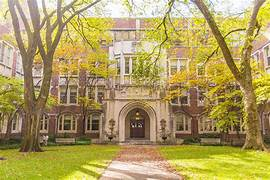
A standout feature of the GPED is its flexible curriculum, which allows students to enroll in courses across various disciplines at Vanderbilt. The program ensures intimate, interactive learning environments through small classes and cohorts of 25-30 students. Students also have the opportunity to gain practical, international field experience.
- Location: Nashville, Tennessee
- Estimated cost per credit: $1,500
- On-campus, online, or both: On-campus
- Accreditation: Southern Association of Colleges and Schools Commission on Colleges
- Credits required to graduate: 30
Unique to the GPED is the Forum—a series of seminars that brings renowned scholars to campus for vibrant discussions with graduate students. The program also boasts a supportive and extensive alum network of over 1,700 individuals from 136 countries. Students receive comprehensive academic and personal support from the department and the university, enhancing their educational journey.
10. North Carolina State University – Department of Economics
North Carolina State University’s Department of Economics is renowned for its innovative research and commitment to teaching excellence. Those with only a bachelor’s degree can move on to one of the top economics master’s programs in the country: a Professional Master in Economics that emphasizes applied economics and data analysis. This is one of the advanced collegiate schools that offer master’s degrees in economics online, which is a plus.
- Location: Raleigh, North Carolina
- Estimated cost per credit: $900
- On-campus, online, or both: Both
- Accreditation: Southern Association of Colleges and Schools Commission on Colleges
- Credits required to graduate: 30
The objective of the program is to provide comprehensive training in economics and econometrics, along with in-depth knowledge in a chosen area of specialization. Although the primary focus is on the Ph.D. degree, students have the opportunity to earn a Master’s degree either in conjunction with their doctorate or as a standalone qualification.
11. California Polytechnic State University – Orfalea College of Business
The Orfalea College of Business at California Polytechnic State University offers a Master’s in Quantitative Economics. The Master of Science degree in Economics is a specialized, year-round program designed to equip individuals with advanced knowledge of metrics and applied microeconomics.
- Loc knowledge action: San Luis Obispo, California
- Estimated cost per credit: $900
- On-campus, online, or both: On-campus
- Accreditation: Western Association of Schools and Colleges Senior Colleges and Universities Commission
- Credits required to graduate: 45
This program prepares students to become economists or data analysts in business, finance, or government sectors, offering the necessary technical skills for mathematical modeling, forecasting, numerical optimization, and data analysis.
12. University of California – Los Angeles (UCLA) – Department of Economics
The Department of Economics at UCLA provides two distinguished master’s programs: the Master of Arts (M.A.) and the Master of Applied Economics (M.A.E.). The M.A. in Economics comprehensively explores economic theory and quantitative methods, preparing students for advanced studies or careers in economics, finance, and policy analysis.
- Location: Los Angeles, California
- Estimated cost per credit: $1,300
- On-campus, online, or both: On-campus
- Accreditation: Western Association of Schools and Colleges Senior Colleges and Universities Commission
- Credits required to graduate: 48
On the other hand, the M.A.E. is a professionally oriented program designed to equip students with practical skills and knowledge in applied economics. It focuses on data-driven economic analysis, perfect for those seeking roles as analysts or economists across various industries and the public sector. Both programs are renowned for their rigorous coursework, esteemed faculty, and commitment to producing graduates capable of making substantial contributions in their respective fields.
13. University of Florida – Department of Economics
The Department of Economics at the University of Florida offers a master’s program that combines core economic theory with practical applications. The program offers a unique focus on environmental economics, making it an excellent choice for those interested in this field.
It is important to note that admission to the master’s program at this institution is only granted under special circumstances. The program doesn’t offer unique master’s courses; instead, master’s students are enrolled in the same classes as Ph.D. students. These courses are designed to prepare students for roles in research and teaching rather than adopting a more applied focus, which is often seen in programs where master’s and Ph.D. courses are separate.
- Location: Gainesville, Florida
- Estimated cost per credit: $1,000
- On-campus, online, or both: On-campus
- Accreditation: Southern Association of Colleges and Schools Commission on Colleges
- Credits required to graduate: 30
14. University of Maryland, College Park – Department of Economics

The Department of Economics at the University of Maryland, College Park, offers a master’s program that provides students with a strong foundation in economic theory, econometrics, and applied economics. The STEM-designated M.S. in Applied Economics at this institution is an award-winning program meticulously crafted to offer rigorous training in quantitative economic analysis and applied econometrics.
- Location: College Park, Maryland
- Estimated cost per credit: $1,275
- On-campus, online, or both: On-campus
- Accreditation: Middle States Commission on Higher Education
- Credits required to graduate: 30
Compared to similar programs, the program offers affordable tuition and a flexible curriculum, allowing working professionals to earn their degrees in just 15 months. As a STEM-designated program, it boasts a strong record of successful employment outcomes for its graduates, supported by a thriving network of alums actively engaged in the field.
15. Colorado School of Mines – Mineral and Energy Quantitative Economics Program
The Colorado School of Mines offers a unique Master of Science program in Mineral and Energy Economics. This program integrates economics, mathematics, and engineering, emphasizing quantitative methods and modeling.
- Location: Golden, Colorado
- Estimated cost per credit: $1,500
- On-campus, online, or both: On-campus
- Accreditation: Higher Learning Commission
- Credits required to graduate: 36
With an international reputation, the program prepares students to understand the complex dynamics of markets and policies in the energy, mineral, and environmental sectors. The curriculum emphasizes applied quantitative tools and real-world business and public policy decisions. The faculty’s unique focus on applied energy, mineral, and environmental economics sets this program apart, offering graduates a distinctive, marketable degree that prepares them for impactful careers.
16. Stony Brook University – Graduate Economics Programs
At Stony Brook University, the Department of Economics offers an in-depth Master’s program known for its emphasis on economic theory, econometrics, and applied economics. This research-oriented program is designed to prepare students for varied career paths in academia, research institutions, government, international institutions, and the private sector.
- Location: Stony Brook, New York
- Estimated cost per credit: $1,200
- On-campus, online, or both: On-campus
- Accreditation: Middle States Commission on Higher Education
- Credits required to graduate: 33
Notably, it provides Master’s students with the same resources and learning opportunities as their Ph.D. counterparts. This includes participating in Ph.D.-level courses and direct access to the same faculty advisors. Two tracks are available to students, based on their needs and career goals: basic and advanced.
17. University of Southern California – Economics Graduate Programs
The Department of Economics at the University of Southern California offers a Master of Arts in Economics, a Master of Science in Applied Economics and Econometrics, a Master of Science in Mathematical Finance, a Master of Science in Spatial Economics and Data Analysis, a dual degree with the USC Gould School of Law, and a Doctor of Philosophy in Economics. The program is recognized for academic excellence, with particular strengths in international and financial economics.
- Location: Los Angeles, California
- Estimated cost per credit: $2,000
- On-campus, online, or both: On-campus
- Accreditation: Western Association of Schools and Colleges Senior Colleges and Universities Commission
- Credits required to graduate: 32
18. Georgetown University – Department of Economics
In 2017, the Department of Economics at Georgetown University introduced a ground-breaking Master of Science in Economics Degree Program (MS-ECON). Recognized as a STEM-designated degree, this two-year program places significant emphasis on advanced econometrics and quantitative economics training.
- Location: Washington, D.C.
- Estimated cost per credit: $2,214
- On-campus, online, or both: On-campus
- Accreditation: Middle States Commission on Higher Education
- Credits required to graduate: 45
The MS-ECON program is structured in two distinct parts. The initial phase, during the fall term, focuses on four core subjects: Microeconomics, Macroeconomics, Econometrics, and Data Analysis. This phase offers students a strong understanding of essential economic models while providing them with the crucial tools for econometric investigation and data analysis, enabling them to comprehend empirical analyses and conduct original research.
The latter part of the program, encompassing the remaining terms, guides students toward applying economic analysis to contemporary economic challenges. This is achieved through elective courses covering significant areas of Economics, with the selection dependent on the academic track chosen by the student: Standard (default), Computational Economics, or Financial Economics.
19. University of Houston – Department of Economics
The Department of Economics at the University of Houston offers a Master’s program that blends a solid foundation in theory with applied analysis. This program offers two 30-hour plans; students can choose between an internship or an applied project option.

The curriculum trains students in microeconomics, econometrics, and time-series data analysis. Particular emphasis is given to health, financial, and energy economics for a more targeted skill set.
- Location: Houston, Texas
- Estimated cost per credit: $1,000
- On-campus, online, or both: On-campus
- Accreditation: Southern Association of Colleges and Schools Commission on Colleges
- Credits required to graduate: 30
Applicants are not required to have an undergraduate degree in economics. Still, they must have completed intermediate courses in microeconomics and macroeconomics, as well as an introductory course in regression analysis. The program, which spans 12 months, equips students with economic and data analysis skills essential for careers in business and government.
20. University of Illinois at Urbana-Champaign – Department of Economics
The Department of Economics at the University of Illinois offers an esteemed Master’s program that combines economic theory with real-world applications. The program’s focus on applied economics equips students with practical skills for analyzing economic data and trends.
- Location: Urbana-Champaign, Illinois
- Estimated cost per credit: $1,500
- On-campus, online, or both: On-campus
- Accreditation: Higher Learning Commission
- Credits required to graduate: 32
Criteria for Choosing the Best Economics Master’s Program
Finding the perfect fit in a sea of outstanding economics graduate schools and programs can be daunting. Here are some key criteria to consider when making your decision.
Your Interests and Career Goals
The first thing you need to consider is your interests and career goals. What area of economics do you want to specialize in? Some programs focus on theoretical economics, others on applied economics, and some offer a blend of both. Certain specializations might be more relevant and beneficial depending on your career aspirations—whether you intend to work in academia, government, the private sector, or non-profit organizations.
Accreditation
When choosing a graduate economics program, ensure that the university is accredited by a recognized body, such as the Colleges and Schools Commission. The program’s reputation, faculty caliber, and the strength of its alumni network are also essential factors to consider.
Faculty
The faculty’s expertise and reputation can significantly influence the quality of your education. Faculty members who are well respected in their field can provide invaluable mentorship and open doors to research opportunities and internships. Plus, they can provide you with a rich network of professionals in your chosen field.
Curriculum and Specializations
Different programs may focus on different areas of economics, like financial economics, quantitative economics, or economic theory. Examine the program’s core and elective courses and align them with your academic interests and career goals. Some programs may offer a Master of Science (MS) or a Master of Arts (MA) in economics, each with its unique emphasis.

On-Campus vs. Online
Some students prefer on-campus programs because they value face-to-face interaction and on-campus resources. Others might prefer online programs because of the flexibility they offer, especially if they’re working while earning their degree. Determine which format is most conducive to your learning style and life situation.
Quantitative Rigor
Many graduate economics programs lean heavily on mathematical economics. Examine the degree of quantitative rigor in the program. If your undergraduate degree had a strong quantitative focus, or if you’re interested in a career in economic data analysis or policy making, a quantitatively challenging program could be an excellent choice.
Research Opportunities
Many master’s programs in economics provide opportunities to engage in original research, which can be a crucial factor if you’re considering a doctoral degree in the future. Look for programs with robust research facilities, such as an economics laboratory, or that offer opportunities to collaborate on research projects with faculty.
Career Support
Does the program offer internships or job placement services? Does it have strong ties to the private sector or government agencies where you could potentially work after graduation? The level of career support can be a decisive factor in your program choice.
Financial Aid
Graduate education can be a significant investment. Consider your budget and the availability of scholarships, grants, work-study programs, and other types of financial aid when choosing a program.
Frequently Asked Questions
What can I do with a master’s in economics?
With a master’s in economics, you can venture into various sectors, including government, academia, financial institutions, consulting, and research. You can work as an economic analyst, policy advisor, financial consultant, market research analyst, and much more.
Is an economics master’s program worth it?
Yes, a master’s in economics is worth it if you’re interested in advanced studies in economic theory, quantitative methods, and policy economics. It can open doors to high-paying jobs and provide the basis for a doctoral degree.
How long does it take to complete a master’s in economics?
Most full-time master’s in economics programs take about 1 to 2 years to complete. However, the duration can vary depending on the program structure and whether you’re studying full-time or part-time.
Is a master’s in economics hard?
A master’s in economics can be challenging, especially if the program has a strong emphasis on quantitative and analytical coursework. However, with dedication and hard work, it’s certainly achievable.
Do you need a background in economics to do a master’s in economics?
While some programs require an undergraduate degree in economics or a related field, others may accept students with a strong quantitative background, even if they only have a bachelor’s degree in a different discipline. It’s best to check the specific entry requirements of the programs you’re interested in.
Does an economics master’s program require a thesis?
Some master’s in economics programs require a thesis, especially those with a research focus. Other programs may offer a non-thesis option, where students complete additional coursework or a capstone project instead.
How is a Master of Science in Economics different from a Master of Arts in Economics?
While both are graduate degrees, a Master of Science in Economics typically places greater emphasis on quantitative and mathematical economics than a Master of Arts in Economics. The former is usually more research-oriented and data-driven, making it an excellent choice for those interested in pursuing a Ph.D. or a career in economic analysis or academia.
What are the prerequisites for pursuing a Master’s degree in economics?
While prerequisites can vary by program, most graduate programs in economics require a bachelor’s degree from an accredited institution. Many programs prefer a degree in economics, but degrees in related fields such as finance, mathematics, or statistics are often acceptable. Prior coursework in economics, calculus, and statistics is typically required.
What are some of the best graduate economics programs?
The best graduate economics programs are those that combine rigorous training in economic theory and quantitative methods with opportunities for practical application. They offer a diverse range of elective courses, enabling students to tailor their studies to their career goals and academic interests. Yale University, Stanford University, and the University of California, Los Angeles, are renowned for their top-notch economics graduate programs.
